
Online Identity Document Verification Software

Nov 28, 2023
Online Identity Document Verification Software

Identity document verification serves as a cornerstone in the digital age, where remote transactions and interactions have become the norm.

This vital process ensures the authenticity of individuals, mitigating the risks of fraud and improving overall security measures.

In this landscape, ScanDoc document scanning emerges as a pivotal tool, offering advanced document scanning capabilities that empower businesses to authenticate identity documents seamlessly.

From passports to driver’s licenses and IDs, ScanDoc enables organizations to verify the legitimacy of crucial documents efficiently and accurately.

By utilizing ScanDoc’s cutting-edge features, businesses can simplify their identity verification processes with high accuracy.

This not only improves operational efficiency but also bolsters security measures, safeguarding against identity theft and fraudulent activities.

Whether utilized for user onboarding procedures, facilitating financial transactions, or meeting stringent compliance requirements, ScanDoc equips organizations with the necessary tools to conduct reliable identity verification swiftly and efficiently.

By integrating ScanDoc into their systems, businesses can fortify their defenses against fraudulent activities, instilling trust and confidence among users and stakeholders alike in an increasingly digitized world.

The Importance of Identity Document Verification Software

In our increasingly digital world, online services such as identity document verification have become integral to our daily lives. From creating a bank account to accessing social media platforms, we rely on digital interfaces for various activities.

However, this convenience has also given rise to identity theft, fraud, and data breaches. Businesses and institutions use cutting-edge identity document verification software to address these security concerns.

This software leverages advanced AI and deep learning methods to perform document scanning (including OCR and MRZ checks), liveness face recognition, and information validation, making it a cornerstone of opening online accounts.

This blog post explores the pivotal role of AI-driven online identity verification software in safeguarding digital interactions and highlights the importance of ScanDoc in the document verification process.
Digital Customer Onboarding


Digital Onboarding Evolution

Historically, the term was predominantly associated with human resources, especially when integrating new employees into an organization.

The onboarding process was defined as the period during which a new employee acquires the essential knowledge and skills to become an integral part of the company.

Traditionally, online customer onboarding took place on-site and in person, such as in a physical bank branch or at a mobile service provider. However, the landscape has drastically changed in recent years.

Digital customer onboarding has become increasingly prevalent, particularly in the wake of the COVID-19 pandemic, necessitating businesses to remotely acquire new customers.

Remote Identity Verification

To remotely verify an individual’s identity, the organization must ascertain if the customer undergoing onboarding is indeed the person they claim to be and whether they are physically present.

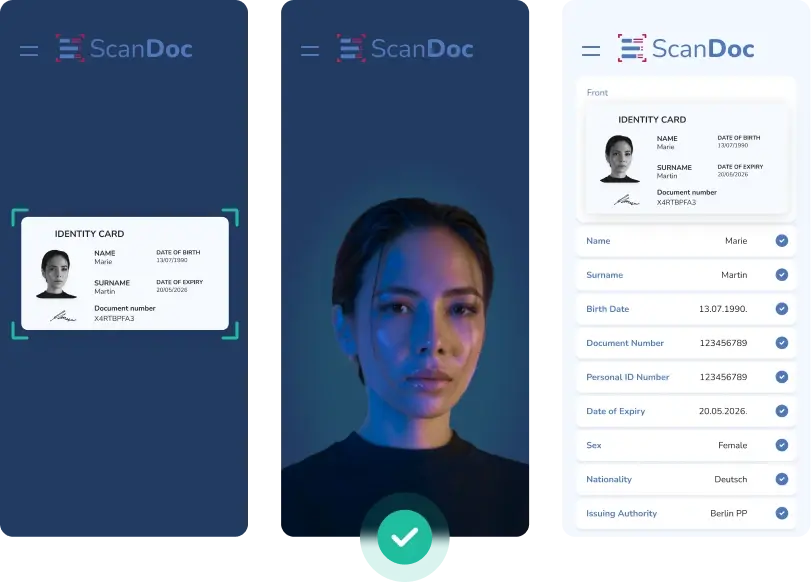
The customer’s identity document or passport is scanned and processed in the identity verification process.

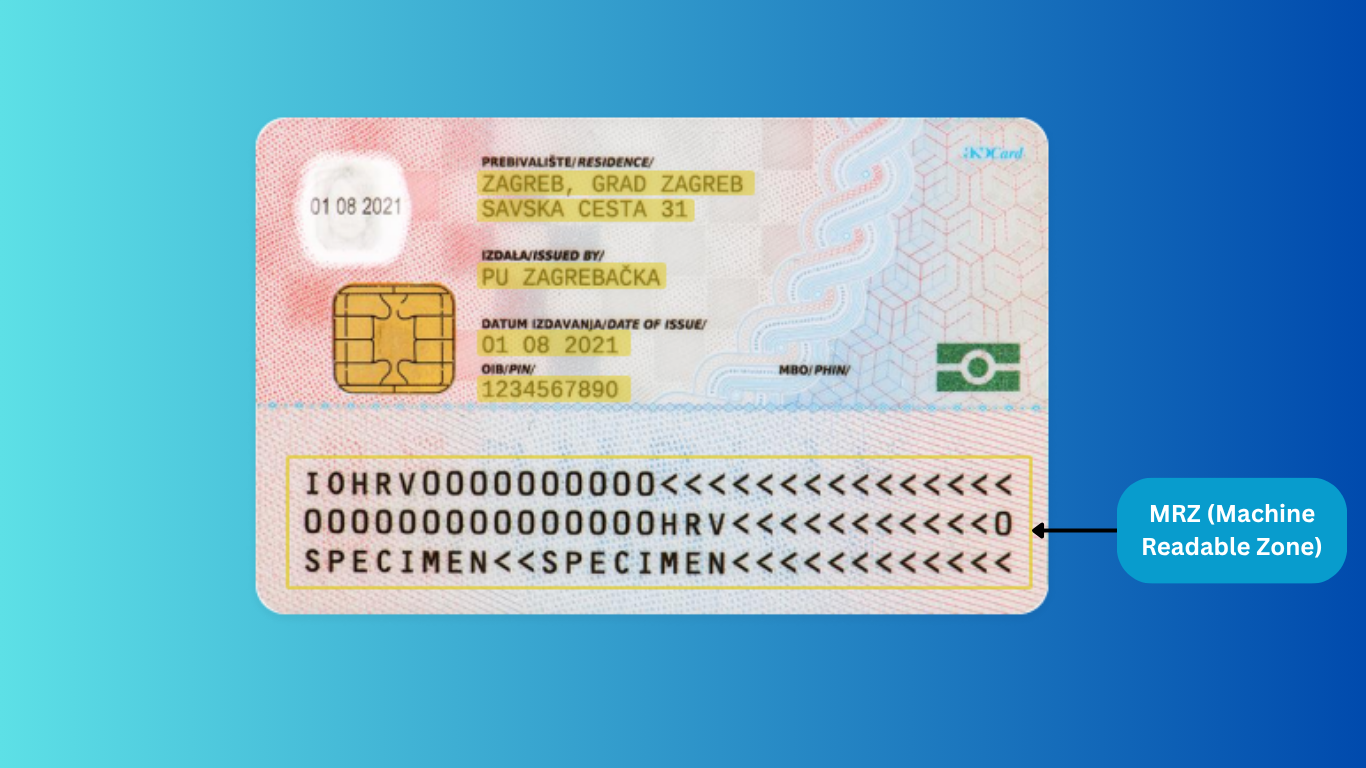
Personal data, including first and last name, date of birth, ID number, expiration date as well as photography, are extracted from the document through Optical Character Recognition (OCR), Machine Readable Zone (MRZ), and Near Field Communication (NFC) and cross-referenced and validated with face recognition.

This also involves verifying the authenticity of the document to prevent tampering.

The subsequent step involves biometrically verifying the customer’s selfie against the biometric template created from the photograph extracted from their ID during document processing.

Simultaneously, liveness detection employs various biometric measurements to confirm that the customer’s face is live and genuine rather than a replica.

Two primary approaches to liveness detection exist: active and passive. Active liveness detection requires customers to perform specific actions, such as nodding, moving their eyes, blinking, smiling, moving their heads, devices, or speaking.

In contrast, passive liveness detection, which has gained popularity, operates inconspicuously in the background during selfie capture, making it more challenging for fraudulent attempts to spoof the system.

Best Identity Verification Software: A Comprehensive Approach

Online identity verification software is designed to provide a holistic approach to confirming an individual’s identity. It integrates various technologies and processes to ensure a thorough verification process.

The primary components of online identity verification software include document scanning (including OCR and MRZ checks), liveness face recognition, and information validation.

Document Scanning Using AI and Deep Learning

Document scanning is the initial step in the identity verification process. Users are typically required to provide a scanned image of an official document, such as a passport, driver’s license, or ID card.

The software employs AI and deep learning algorithms to extract information from the document, which is then cross-referenced with the data provided during the registration process.

OCR (Optical Character Recognition): AI-driven OCR technology is pivotal in document scanning. OCR enables the software to recognize and extract text from images, effectively converting printed or handwritten text into machine-readable data.

This capability allows the software to extract critical information like names, addresses, dates of birth, and document numbers from the uploaded document.

MRZ (Machine-Readable Zone) Checks: The MRZ on official documents contains standardized information. AI algorithms are employed to read and validate MRZ data, ensuring its authenticity.

This step is crucial for verifying the legitimacy of the document and detecting any signs of tampering or fraud.

Liveness Face Recognition 

Liveness face recognition is another vital component of online identity verification software. This technology ensures that the individual presenting the document is indeed the person they claim to be.

Liveness checks are designed to thwart fraudsters who might attempt to use static images or pre-recorded videos to impersonate someone else.

Deep learning techniques are utilized to perform liveness checks, which may involve various actions, such as blinking, nodding, or smiling, while the software captures and analyzes the user’s facial features in real-time.

The objective is to confirm the user’s presence and prevent attempts at spoofing.

Information Validation

Information validation is the final step in the identity verification process. During this phase, the software cross-references the data extracted from the document with the information provided by the user during registration.

Any inconsistencies or discrepancies may lead to a failed verification, necessitating further investigation or manual verification by a human operator.

Information validation is paramount in preventing identity theft and fraud, as it ensures that the individual’s identity is verified with a high level of accuracy.

The Significance of ScanDoc in Online Identity Verification

While online identity verification software encompasses a range of components, one standout solution for document scanning is ScanDoc. ScanDoc is a technology that specializes in extracting information from official documents and plays a pivotal role in document verification.

Here’s why ScanDoc is crucial in the identity verification process:

High Accuracy and Efficiency: ScanDoc is 99.9% accurate in extracting data from documents. This precision is critical to ensure the verification information is correct and reliable. Furthermore, ScanDoc operates swiftly, simplifying the verification process for users.

Extensive Document Compatibility: ScanDoc supports many official documents, including passports, driver’s licenses, ID cards, and more. This versatility ensures that users can provide the most convenient document, thus enhancing the user-friendliness of the verification process.

Fraud Prevention: ScanDoc is instrumental in preventing fraud. Accurately extracting and validating data from documents substantially reduces the risk of fraudsters using fake or tampered documents for identity verification.

Improved User Experience: A smooth and efficient user experience is essential for online platforms. ScanDoc’s speed and precision contribute to a positive user experience, reducing frustration and bolstering business conversion rates.

The Benefits of AI-Driven Identity Verification Software

Now that we’ve explored the components and processes of online identity verification software, it’s crucial to understand the benefits that this technology offers to both businesses and individuals:

Improves Security: Identity verification software significantly improves security by mitigating the risk of identity theft and fraud. By verifying the identity of users, businesses can ensure that only legitimate individuals access their services.

Regulatory Compliance: Numerous industries, such as finance and healthcare, are subject to strict regulatory requirements for identity verification. Identity verification software helps businesses comply with these regulations, avoiding potential penalties and reputational damage.

Reduced Manual Work: Identity verification software automates the verification process, reducing the need for manual data entry by employees. This not only saves time but also lowers operational costs.

User Convenience: Online users value convenience, and identity verification software provides a seamless and user-friendly experience. It eliminates the need for in-person visits and enables individuals to verify their identity from the comfort of their homes.

Conversion Rates: A simplifyed onboarding process and improved user experience can significantly improve conversion rates. An efficient verification process encourages more users to complete verification and start using the platform.

Trust: Robust identity verification measures on a platform instill trust and confidence in the service. Trust is a significant competitive advantage, attracting users and retaining their loyalty.

Best Practices for an Effective Digital Onboarding Experience

Efficiency and user-friendliness are essential in digital onboarding to make a strong first impression. The identity verification process should be as smooth as possible to prevent user abandonment of time-consuming procedures or malfunctioning apps.

To align with users’ expectations of a fully online process, digital onboarding should be entirely paperless, eliminating the need for physical document submission or branch visits.

Efficiency ensures a quick onboarding process, employing state-of-the-art technology for real-time identity verification. Furthermore, digital onboarding solutions should be accessible anytime, anywhere, and function directly on users’ devices with low bandwidth or offline capabilities.

Security remains paramount, and organizations must only employ digital onboarding solutions to thwart fraud attempts and safeguard user data.

Use Cases of AI-Driven Identity Verification Software

AI-driven identity verification software finds applications in a wide array of industries and use cases:

Financial Services: Banks and financial institutions use AI-driven identity verification software to onboard customers, verify loan applicants, and combat activities like money laundering.

Healtcare: Healthcare providers use AI-driven identity verification to confirm the identity of patients, particularly in telehealth and telemedicine services.

E-Comerce: Online retailers leverage AI-driven identity verification software to prevent fraud in online transactions and ensure that the person making a purchase is the legitimate cardholder.

Travel and Hospitality: Airlines, hotels, and car rental companies use AI-driven identity verification to confirm the identity of travelers and prevent identity fraud.

Online Gaming and Gambling: Online gaming and gambling platforms rely on AI-driven identity verification to enforce age and location restrictions and prevent fraudulent activities.

Conclusion

Online identity verification software, powered by AI and deep learning, is pivotal in securing digital interactions.

It provides a comprehensive solution for online identity verification through document scanning, OCR and MRZ checks, liveness face recognition, and information validation.

ScanDoc, as a specialized solution for document scanning, is indispensable in ensuring that the extracted data from official documents is accurate and reliable. Its accuracy, efficiency, and fraud prevention capabilities make it a key player in document verification.

As the digital landscape evolves, AI-driven identity verification software will remain essential for safeguarding individuals and organizations from identity theft and fraud. Moreover, it helps build trust, improve user experiences, and ultimately drive the growth of online platforms.

In a world where digital identity is increasingly valuable and vulnerable, robust identity verification is more critical than ever.

Click here to find out more about ScanDoc.

FAQ

What is online document identity verification software?

It’s a digital tool that authenticates individuals by verifying their identification documents, such as passports or driver’s licenses, using technologies like OCR and biometric analysis.

How does this software ensure the authenticity of documents?

It employs advanced AI and deep learning methods to perform document data extraction, including OCR and MRZ checks, to validate and inject information into any system or software.

What role does face recognition play in identity verification?

Face recognition, especially when coupled with liveness detection, verifies the live presence of the individual, reducing the risk of identity fraud.

Why is online identity verification necessary in today’s digital world?

With the rise of digital interactions, verifying identities online is crucial to prevent identity theft, fraud, and data breaches.

How does ScanDoc enhance the identity verification process?

ScanDoc offers advanced document scanning capabilities, enabling businesses to authenticate identity documents seamlessly and efficiently.

What types of documents can be verified using this software?

The software can verify over 500 identification documents, including passports, driver’s licenses, and ID cards.

How does OCR technology contribute to identity verification?

OCR (Optical Character Recognition) extracts text from scanned images of documents, allowing for automated data extraction and validation.

What is MRZ, and why is it important?

MRZ (Machine Readable Zone) is a section of identity documents encoded with personal data; scanning and decoding ensures the document’s authenticity.

Interested to see how ScanDoc can supercharge your business?

Request a Demo

Similar articles

What Is a Machine Readable Zone (MRZ) — And Why It Matters for Identity Verification What Is a Machine Readable Zone (MRZ) — And Why It Matters for Identity Verification

Every time someone crosses a border, checks into a flight, opens a bank account, or verifies their identity online, there is a small strip of text doing a significant amount of work behind the scenes. It sits quietly at the bottom of passports, ID cards, and travel documents the world over. It looks like a line of scrambled characters — and yet it carries everything a system needs to verify who someone is in a matter of milliseconds. This is the Machine Readable Zone, or MRZ. And understanding how it works is key to understanding modern identity verification. What Is a Machine Readable Zone? A Machine Readable Zone is a standardised section found at the bottom of identity documents — most commonly on the photo page of a passport or the reverse side of an ID card. It contains the document holder's core personal data encoded in a format that machines can read instantly using optical character recognition (OCR) technology. The information encoded in the MRZ typically includes the document type, the issuing country, the document number, the holder's full name, date of birth, nationality, gender, and the document's expiry date. It also includes check digits — a mathematical verification mechanism that allows systems to detect whether any part of the MRZ has been tampered with or forged. The MRZ is not new technology. The International Civil Aviation Organization (ICAO) began its work on machine-readable travel documents in 1968, with the aim of speeding up passenger clearance at border control. The first specifications for machine-readable passports were published in 1980, and the technology was quickly adopted globally. By 2015, the ICAO had phased out all non-machine-readable passports among its 193 member states. Today, every internationally accepted travel document uses MRZ. What Does the MRZ Actually Look Like? The MRZ appears as two or three lines of text at the bottom of the document, consisting of uppercase letters, numbers, and the filler character "<". To the human eye it looks like noise. To a machine, it is a precisely structured data field. The ICAO standardises three MRZ formats, defined in Document 9303, which all 193 member states adhere to: Type 1 is used for credit card-sized documents such as national ID cards and driving licences. It consists of three lines, each with 30 characters. Type 2 is rare and used for some travel documents that fall between the size of an ID card and a passport booklet. It has two lines of 30 characters each. Type 3 is used for standard passport booklets. It features two lines, each with 44 characters — the format most people encounter when travelling internationally. This standardisation is what makes MRZ so powerful. Because every compliant document uses the same format, OCR systems can be trained to extract the right data fields every time, regardless of which country issued the document or what language it is written in. [video width="854" height="480" mp4="https://scandoc.ai/wp-content/uploads/2026/05/test12.mp4" loop="true" autoplay="true"][/video] How Machines Read the MRZ The process of reading an MRZ happens in three steps, and modern technology has made each of them nearly instantaneous. Step one: scanning. The document is presented to a camera or scanner — this could be a passport reader at an airport, a smartphone camera during a remote onboarding process, or a dedicated document scanner at a bank branch. The optical sensor captures an image of the MRZ. Step two: extraction. OCR technology processes the image and extracts the structured data fields from the MRZ — name, document number, date of birth, expiry date, nationality, and so on. Because the format is standardised, the system knows exactly where each field sits within the character string. Step three: validation. The system calculates checksums using the check digits embedded in the MRZ. If the checksum does not match the data, it signals that the document may have been altered or forged. The extracted data is then cross-referenced against relevant databases — watchlists, sanctions lists, criminal records — depending on the use case. The entire process takes milliseconds. What would take a trained officer several minutes of manual inspection can be completed automatically before a caller has finished speaking or a user has moved to the next step of an onboarding form. Why Check Digits Matter The check digit system is one of the most underappreciated aspects of MRZ security. Each key data field in the MRZ — the document number, the date of birth, the expiry date, and the full MRZ line — has its own associated check digit. This digit is calculated from the characters in the preceding field using a specific algorithm. When a machine reads the MRZ, it recalculates the expected check digit from the data it has extracted and compares it to the check digit printed in the document. If they match, the data is intact. If they do not match — even by a single character — the system flags the document as potentially fraudulent. This makes the MRZ extremely difficult to forge convincingly. Changing a date of birth, altering a document number, or modifying a name would require recalculating every affected check digit correctly. A single error anywhere in the string is enough to trigger a mismatch. Where MRZ Technology Is Used Today MRZ was originally developed for the aviation industry, but its applications have expanded dramatically alongside the proliferation of smartphones, cameras, and digital onboarding processes. Today it is used across a wide range of sectors. Travel and border control remains the most visible use case. Passport readers at airports and land border crossings scan MRZ data in real time to verify identity, check expiry dates, and cross-reference against watchlists and no-fly databases. The speed and accuracy of MRZ scanning is what allows modern airports to process thousands of passengers per hour without compromising security. Banking and financial services rely heavily on MRZ for identity verification during customer onboarding. When a new customer submits their passport or ID card as part of a KYC (Know Your Customer) process, MRZ scanning allows the bank to instantly extract and validate the key data fields, reducing manual processing time and lowering the risk of accepting fraudulent documents. Healthcare uses MRZ to verify patient identities during registration, prescription processing, and insurance claim submission. Accurate identity verification in healthcare is not just an administrative matter — it directly affects patient safety and billing integrity. Retail and e-commerce platforms use MRZ for age verification on age-restricted products, as well as for fraud prevention during account creation or high-value transaction authorisation. Insurance and financial services use MRZ as part of structured data collection processes — allowing agents to intake accurate policyholder information quickly, reducing errors in claims and renewals. Public services — including municipal offices, permit processing, and benefits administration — use MRZ to verify applicant identity accurately and consistently, regardless of the volume of applications being processed. MRZ and Fraud Prevention Beyond speed, one of the most important functions of MRZ is its role in detecting forged or tampered documents. Fraudsters who attempt to alter the personal data on a document — changing a name, adjusting a date of birth, or substituting a photo — face a significant technical challenge: any alteration to the printed data fields must be accompanied by a corresponding change to the check digits. Getting this right requires precise knowledge of the ICAO algorithm. Getting it wrong results in a checksum mismatch that is detected instantly. Beyond the mathematical checks, OCR systems can also detect font inconsistencies, character spacing anomalies, and degraded print quality that may indicate a document has been altered or reproduced. For compliance teams managing KYC, AML, and fraud prevention obligations, MRZ scanning adds a fast, reliable, and highly automated layer of document verification that significantly reduces the risk of accepting fraudulent identity documents. How ScanDoc Reads MRZ ScanDoc is built on the recognition that speed and accuracy in document processing are not a trade-off — they are both achievable, simultaneously, with the right technology. ScanDoc's OCR engine scans and processes the Machine Readable Zone instantly, extracting all structured data fields in a single pass. There is no manual data entry, no delay waiting for a human to check the document, and no risk of transcription error. The system handles the full MRZ reading pipeline — image capture, text extraction, checksum validation, and data output — automatically. This makes ScanDoc directly applicable to any workflow where identity documents need to be processed quickly and accurately. A hotel reception handling check-in queues. A clinic registering patients at the front desk. A financial services company running remote onboarding. A logistics provider verifying driver identity. In every case, the document is scanned, the MRZ is read, and the verified data is passed downstream — in under a second. ScanDoc supports all three ICAO MRZ types, covering passports, national ID cards, driving licences, and travel documents issued across all major jurisdictions. The system is designed for high-precision recognition across variable image conditions — different lighting, angles, and camera quality — making it practical in real operational environments, not just controlled lab settings. For organisations that process high volumes of identity documents and cannot afford errors, delays, or compliance gaps, ScanDoc provides the document intelligence layer that makes the difference. The MRZ in One Sentence The Machine Readable Zone is a small strip of standardised text that carries everything a machine needs to verify an identity document — instantly, automatically, and reliably. ScanDoc reads it faster than a human ever could, and with a precision that manual inspection cannot match. Need high-precision, instant document recognition? Contact ScanDoc to find out more. FAQ What is the MRZ on a passport? The MRZ on a passport is the machine-readable zone at the bottom of the photo page, consisting of two lines with 44 characters each. It contains the holder's name, date of birth, nationality, document number, issuing country, and expiry date, encoded in a standardised format readable by OCR systems. What is the MRZ on an ID card? The MRZ on a national ID card or driving licence consists of three lines with 30 characters each. It contains the same core information as a passport MRZ and follows the same ICAO-standardised format. What is the difference between a machine-readable passport and a regular passport? A machine-readable passport contains an MRZ that allows automated systems to extract and verify the holder's data instantly. A non-machine-readable passport requires manual inspection, which is slower and more prone to error. Non-machine-readable passports have been phased out by the ICAO since 2015. How does MRZ help prevent fraud? The MRZ includes check digits calculated from the document's data fields. Any alteration to the document that is not accompanied by a correctly recalculated check digit will produce a mismatch, flagging the document as potentially forged. This makes MRZ a powerful tool in automated fraud detection and document authentication workflows. Televanta is AI Phone Agent.

Read more
ScanDoc: The Leading Bank Card Scanning Solution for Businesses ScanDoc: The Leading Bank Card Scanning Solution for Businesses

In today’s fast-paced business environment, manual data entry of payment card information remains one of the most significant bottlenecks in financial operations. ScanDoc offers a comprehensive bank card scanning solution that reduces processing time by up to 80% while maintaining exceptional accuracy. This technology eliminates the tedious and error-prone process of manually entering card details, allowing businesses to process transactions more efficiently and provide better customer experiences. Whether you’re a financial institution, retail business, or service provider that handles card payments, ScanDoc’s technology can dramatically improve your payment processing workflow. This article explores how ScanDoc’s card scanning capabilities work, the specific benefits they provide, and how they can be integrated into your existing systems. https://www.youtube.com/watch?v=VQXEVIQYAQU Understanding ScanDoc Card Scanning Features and Capabilities ScanDoc utilizes cutting-edge technology to capture and process card information instantly. The ScanDoc card scanning process takes less than two seconds from capture to data extraction, making it significantly faster than manual entry methods. The system works by using a combination of advanced optical character recognition (OCR) and artificial intelligence to identify and extract data from payment cards. The solution can capture all visible information on payment cards, including: Credit card numbers (PAN - Primary Account Number) Cardholder name Expiration date IBAN (International Bank Account Number), when present on the card Card issuer information Card type (debit, credit, etc.) What sets ScanDoc apart is its ability to accurately read this information regardless of card design, orientation, or lighting conditions. The credit card scanning technology can extract data from cards in any condition or orientation, making it extremely user-friendly and versatile. How OCR Technology for Payments Powers ScanDoc’s Scanning Capabilities At the core of ScanDoc’s solution is advanced OCR technology for payments that converts visual card information into machine-readable text. Unlike basic OCR systems, ScanDoc employs specialized algorithms specifically designed for financial documents and payment cards. The technology works through a multi-step process: Image capture: The system captures a high-quality image of the payment card Image preprocessing: Automatic adjustments for lighting, angle, and clarity Text detection: Identification of text regions on the card Character recognition: Conversion of visual text to digital data Data validation: Verification of extracted information against expected patterns Structured output: Organization of data into standardized formats The advanced OCR technology for payments used by ScanDoc ensures precise data capture from any card type. This technology continuously improves through machine learning, becoming more accurate with each scan processed. [caption id="attachment_2498" align="aligncenter" width="810"] Credit Card Data Extraction[/caption]   Key Benefits of ScanDoc’s Bank Card Scanning Solution Speed and Efficiency Among modern payment processing solutions, ScanDoc stands out for its exceptional accuracy and speed. The system can process a card in seconds, compared to the 15-30 seconds typically required for manual entry. This efficiency translates to: Faster checkout experiences for customers Reduced wait times in queues Higher transaction processing capacity More efficient allocation of staff resources Accuracy and Error Reduction Manual data entry inevitably leads to errors, with typical error rates ranging from 0.5% to 3%. These errors can result in failed transactions, customer frustration, and time-consuming corrections. ScanDoc’s bank card scanning solution achieves over 99% accuracy, virtually eliminating these issues. Businesses implementing ScanDoc’s automated card processing report significant reductions in transaction times and error rates. This improvement leads to fewer payment disputes, chargebacks, and customer service issues related to incorrect data entry. Improved Security Security is paramount when handling payment card information. ScanDoc’s secure card scanning meets all regulatory requirements for financial data protection. The system processes card data locally without storing images, reducing the risk of data breaches. Additionally, the elimination of manual entry means fewer people have access to sensitive card information, further improving security.   Advanced Credit Card Scanning Technology Behind ScanDoc’s Solution ScanDoc’s credit card scanning technology represents the cutting edge of financial data capture. The system employs sophisticated image recognition capabilities that can: Read embossed and flat-printed card details Process cards with various designs and layouts Handle damaged or worn cards Recognize special characters and formats used in financial information The integration of AI in payment processing allows ScanDoc to continuously improve its recognition accuracy. The AI component learns from each scan, adapting to new card designs and improving its ability to handle challenging scanning conditions. Comprehensive Card Data Extraction with ScanDoc Secure card data extraction is at the core of ScanDoc’s value proposition for financial institutions. The system can extract all visible information from payment cards, including: Credit Card Number: The 15-16 digit PAN is accurately captured and validated using checksum algorithms to ensure correctness. Cardholder Name: The system recognizes and extracts the cardholder’s name, correctly handling various formats and special characters. Expiry Date: Card expiration dates are captured and formatted consistently, regardless of the presentation format on the card. IBAN Scanning Technology for International Payments: For cards that include IBAN information, ScanDoc’s IBAN scanning technology supports international payment processing without manual entry. This feature is particularly valuable for businesses operating in regions where IBAN is commonly used. With ScanDoc’s credit card information scanning, all visible card details are captured in one go, eliminating the need for multiple data entry steps. Integrating ScanDoc with Your Existing Digital Payment Solutions One of ScanDoc’s most valuable features is its open API architecture, which enables seamless integration with existing systems. ScanDoc seamlessly integrates with existing digital payment solutions through its open API architecture, allowing businesses to: Connect with payment gateways Integrate with point-of-sale systems Link to customer relationship management (CRM) software Work with accounting and financial management tools The API is well-documented and designed for developer-friendly implementation, with sample code and integration guides available. This flexibility means businesses can add ScanDoc’s capabilities to their existing workflow without disrupting their current operations. [caption id="attachment_2499" align="aligncenter" width="811"] credit card scan[/caption]   Simplify Your Automated Card Processing with ScanDoc Implementing ScanDoc’s solution is straightforward and delivers immediate benefits. The system can be deployed as: A mobile SDK for integration into iOS and Android applications A web-based solution for browser applications A standalone system for specific point-of-sale environments Businesses can choose the implementation that best fits their needs and technical infrastructure. The automated card processing capabilities can be customized to match specific business requirements, including: Custom data validation rules Specific data extraction requirements Branded user interfaces Integration with proprietary systems Conclusion: Elevating Payment Processing with ScanDoc ScanDoc’s bank card scanning solution represents a significant advancement in payment processing technology. By combining cutting-edge OCR, AI capabilities, and seamless integration options, ScanDoc eliminates the inefficiencies and errors associated with manual card data entry. The benefits extend beyond simple time savings to include improved security, improved customer experience, and reduced operational costs. As businesses continue to seek ways to optimize their payment processes, ScanDoc provides a proven solution that addresses multiple pain points simultaneously. For financial institutions, retailers, and service providers looking to simplify their payment operations, ScanDoc offers the ideal combination of speed, accuracy, and integration capabilities. By implementing this technology, businesses can stay competitive in an increasingly digital financial landscape while providing better service to their customers. Ready to experience the benefits of automated card scanning? Try ScanDoc Bank Card Scanning today. Contact ScanDoc today to learn more about implementation options and see a demonstration of the technology in action.

Read more
How to Build eIDAS-Compliant Barcode Scanning Solution? How to Build eIDAS-Compliant Barcode Scanning Solution?

Digital transformation has revolutionized how businesses operate across borders, particularly within the European Union. However, this shift brings significant challenges in verifying identities and ensuring secure electronic transactions. The eIDAS regulation addresses these challenges by establishing a standardized framework for electronic identification and trust services. Despite its importance, many organizations struggle with implementation due to technical complexities and evolving requirements. This article explores what eIDAS is, how organizations can prepare for compliance, and how ScanDoc’s barcode scanning technology plays a crucial role in simplifying implementation through efficient data extraction and solution integration. What is eIDAS? The Foundation of Digital Trust in Europe eIDAS compliance refers to adherence to Regulation (EU) No 910/2014, which came into effect on July 1, 2016. This regulation replaced the earlier eSignature Directive (1999/93/EC) and established a comprehensive framework for electronic identification and trust services across all EU member states. The eIDAS regulation serves a fundamental purpose: to create a predictable regulatory environment for secure electronic interactions between citizens, businesses, and public authorities. Establishing mutual recognition of electronic identification means across borders enables seamless digital transactions throughout the European single market. Key Components of eIDAS The regulation addresses two primary areas: Electronic identification: This component focuses on the system and processes used to verify the identity of individuals or organizations in the digital realm. The regulation defines three assurance levels: Low: Basic identity verification with minimal security requirements Substantial: More rigorous verification with stronger security controls High: The most stringent level requiring sophisticated verification methods Trust services: These are electronic services that create, validate, and preserve various forms of electronic transactions. The regulation recognizes five core trust services: Electronic signatures: Digital expressions of a person’s agreement to document content Electronic seals: Digital equivalents of business stamps that guarantee document origin Electronic timestamps: Elements that link documents to specific points in time Website authentication: Certificates that verify website trustworthiness Electronic registered delivery: Secure channels for document transmission A qualified trust service provider must undergo rigorous certification and regular audits to achieve and maintain this status. These providers appear on national trusted lists, giving them legal recognition throughout the EU. The Evolution to eIDAS 2.0 The digital landscape continues to evolve, prompting the European Commission to propose amendments known as eIDAS 2.0. This update introduces the European Digital Identity Wallet, a tool that enables citizens to store and manage their digital identities and official documents securely. The European Digital Identity Wallet represents a significant advancement in the implementation of electronic identification, enabling citizens to prove their identity and share electronic documents with just a few clicks. Organizations must prepare for these changes as they will impact how digital identity verification is conducted. How to Prepare for eIDAS Compliance Achieving eIDAS compliance requires a systematic approach that addresses both technical and organizational aspects. Here’s a comprehensive guide to preparing your organization: 1. Assess Your Current Digital Identity Infrastructure Begin by evaluating your existing systems and processes for electronic identification and trust services. This assessment should: Identify which digital transactions require eIDAS compliance Evaluate current authentication methods against eIDAS assurance levels Review document verification processes for compliance gaps Assess cryptographic algorithms and key management practices Many organizations discover that their existing document verification processes fall short of eIDAS requirements, particularly regarding cross-border recognition and security controls. 2. Determine Required Assurance Levels Based on your business needs and risk assessment, determine which assurance level is appropriate for different transactions. Consider: The sensitivity of the data being processed Legal requirements for specific industries (banking, healthcare, etc.) Cross-border transaction requirements User experience implications For most business applications involving financial transactions or personal data, the “substantial” level is typically the minimum requirement. 3. Select Appropriate Trust Services Identify which trust services are necessary for your operations: Do you need qualified electronic signatures for legally binding agreements? Are electronic seals required for organizational validation? Do you need qualified timestamps for time-sensitive transactions? Is secure delivery of documents essential to your processes? Each trust service has specific implementation requirements that must be addressed in your compliance strategy. 4. Implement Secure Digital Identity Solutions Secure digital identity implementation requires robust technical solutions that: Support the required assurance levels Implement proper cryptographic controls Ensure data protection and privacy Enable interoperability with other systems This often involves integrating specialized tools like barcode solutions that can securely capture and process identity information from official documents. 5. Partner with Qualified Providers Unless you plan to become a qualified trust service provider yourself, you’ll need to partner with existing qualified providers. Consider: Their certification status and inclusion in trusted lists The specific services they offer Integration capabilities with your systems Support for cross-border operations 6. Prepare for Certification and Audits If you’re implementing trust services that require qualified status, prepare for the certification process: Engage with an accredited Conformity Assessment Body Document your security controls and processes Implement comprehensive audit logging Establish incident response procedures Regular audits (at least every 24 months) are mandatory for maintaining qualified status. 7. Plan for the European Digital Identity Wallet As eIDAS 2.0 approaches implementation, organizations should prepare for integration with the European Digital Identity Wallet: Monitor regulatory developments and technical specifications Plan API integrations for wallet compatibility Design user experiences that leverage wallet capabilities Consider how your verification processes will adapt to this new paradigm How ScanDoc Simplifies eIDAS Implementation Through Barcode Technology ScanDoc’s barcode scanning technology offers a powerful solution for organizations implementing eIDAS-compliant identification processes. By automating data extraction and system integration, ScanDoc addresses key challenges in the compliance journey. Advanced Barcode Solutions for Secure Document Verification Modern barcode solutions play a crucial role in secure document verification. ScanDoc’s technology supports multiple barcode formats (QR, Data Matrix, PDF417) commonly used in identity documents across Europe. This versatility ensures compatibility with various national ID schemes and supports cross-border recognition as required by eIDAS. Several critical functions: Captures barcode data from physical and digital documents Verifies the authenticity of the encoded information Extracts identity attributes securely Processes data according to eIDAS security requirements This automated approach significantly reduces the risk of manual data entry errors while accelerating verification workflows. Seamless Integration with Identity Providers and Trust Services ScanDoc facilitates electronic identification through its advanced integration capabilities. The system connects with: National identity providers across EU member states Qualified trust service providers for signature validation Authentication systems at various assurance levels Existing business applications and workflows This integration capability is essential for organizations implementing digital identity solutions that must work across multiple systems and platforms. Supporting eIDAS Assurance Levels ScanDoc’s architecture supports the implementation of all three eIDAS assurance levels: Low: Basic barcode scanning with standard verification Substantial: Simplified verification with cryptographic validation High: Advanced security controls, including tamper detection Organizations can configure the system based on their specific compliance requirements, ensuring they meet the necessary standards without implementing excessive controls that might impact user experience. Automating Data Extraction and Processing One of ScanDoc’s most valuable features is its ability to extract information from barcodes and inject it directly into applications or systems. This capability: Eliminates manual data entry, reducing errors and processing time Ensures consistent data formatting across systems Maintains data integrity throughout the process Creates audit trails for compliance verification For example, when scanning an identity document with a barcode, ScanDoc can extract personal information, verify its authenticity, and automatically populate registration forms or authentication solutions—all while maintaining eIDAS compliance. Preparing for the European Digital Identity Wallet ScanDoc is designed with future compatibility in mind, particularly regarding the European Digital Identity Wallet. The system: Supports the emerging standards for wallet integration Enables QR code scanning for wallet authentication Maintains compliance with evolving eIDAS 2.0 requirements This forward-looking approach helps organizations prepare for the next generation of digital identity verification while addressing current compliance needs. Benefits of Using ScanDoc for eIDAS Compliance Implementing ScanDoc for eIDAS compliance offers several significant advantages: Simplifyed Security and Compliance Automated verification reduces the risk of human error in identity verification Cryptographic validation ensures document authenticity Secure data handling complies with eIDAS security requirements Comprehensive audit logging supports compliance verification Improved Efficiency and User Experience Reduces verification time from minutes to seconds Eliminates manual data entry and associated errors Provides a consistent experience across different document types Supports both in-person and remote verification scenarios Future-Proof Implementation Compatibility with evolving eIDAS 2.0 requirements Support for the European Digital Identity Wallet Adaptability to new barcode formats and standards Regular updates to maintain compliance with regulatory changes Cost-Effective Compliance Reduces implementation costs compared to custom-built solutions Minimizes ongoing operational expenses through automation Lowers the risk of non-compliance penalties Provides scalability to handle growing transaction volumes Conclusion eIDAS compliance presents both challenges and opportunities for organizations operating in the European digital market. By establishing a standardized framework for electronic identification and trust services, the regulation enables secure cross-border transactions while protecting consumers and businesses. Preparing for eIDAS requires a systematic approach that addresses technical, organizational, and legal aspects of digital identity verification. By implementing appropriate solutions and partnering with qualified providers such as ScanDoc, organizations can achieve compliance while improving their digital processes. ScanDoc’s barcode scanning technology offers a powerful tool for organizations on this journey, automating document verification and data integration while maintaining compliance with eIDAS requirements. As the regulatory landscape evolves with eIDAS 2.0 and the European Digital Identity Wallet, ScanDoc’s forward-looking approach ensures that organizations remain compliant while benefiting from the latest advances in digital identity technology. By investing in the right tools and processes today, organizations can not only achieve eIDAS compliance but also position themselves for success in the increasingly digital European market.

Read more